Conventional Deadlift
The king of lifts: pick heavy stuff up, put it down.
Body Part
Legs
Equipment
Barbell
Level
Intermediate
Type
Compound
Force
Pull
The conventional deadlift is a full-body hip hinge where you pull a loaded barbell from the floor to a standing lockout with a roughly shoulder-width stance and hands outside the legs. It builds raw posterior-chain strength and is one of the few lifts where almost everyone can move serious weight, making it a staple of nearly every strength program.
Muscles Worked
In Position
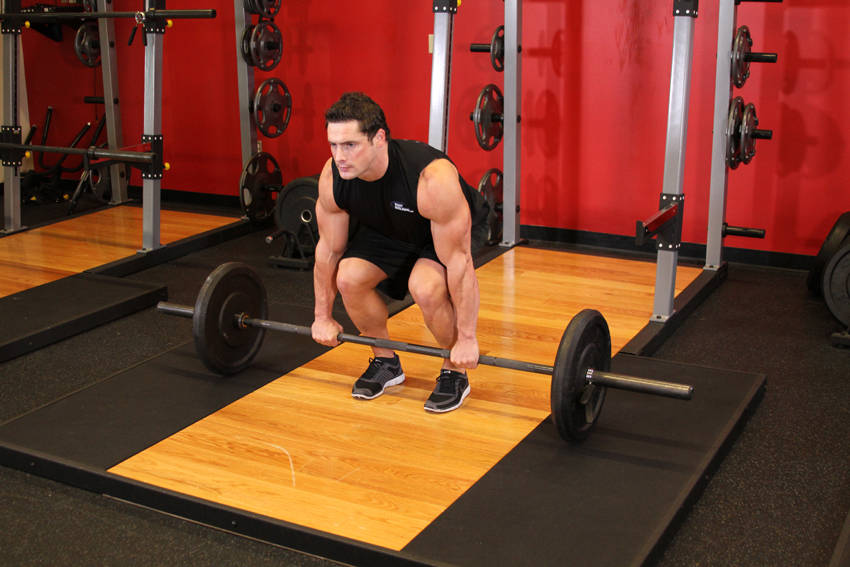
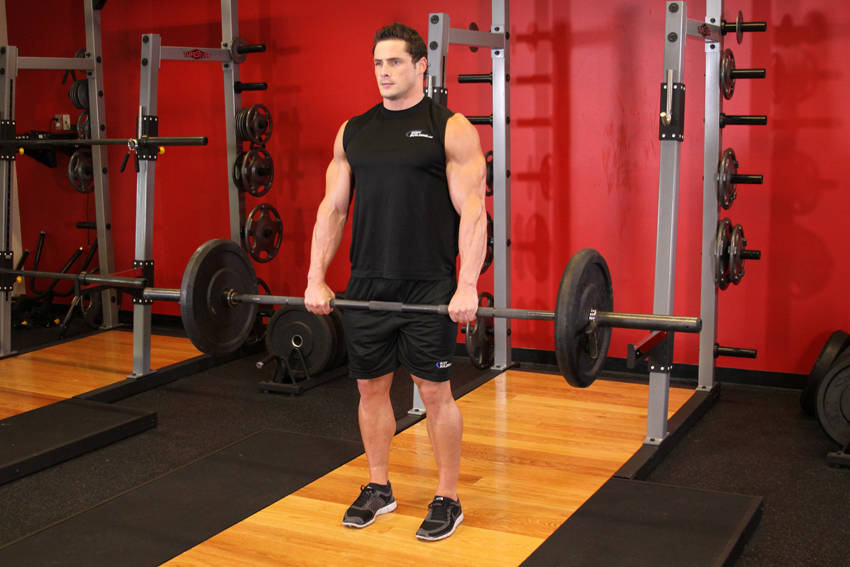
How to Do the Conventional Deadlift
- 1Set the bar over your midfoot (roughly an inch from your shins) with feet about hip-width and toes slightly out.
- 2Hinge down and grip the bar just outside your legs, hands about shoulder-width, arms straight and vertical.
- 3Drop your hips until your shins touch the bar, then lift your chest and pull the slack out of the bar so it 'clicks' against the plates.
- 4Brace your core hard, set your lats by 'protecting your armpits,' and take a big breath into your belly.
- 5Push the floor away with your legs, keeping the bar dragging up your shins and thighs as your hips and shoulders rise together.
- 6Finish by driving your hips forward to a tall, locked-out standing position, then control the bar back down along the same path.
Coaching Cues
Common Mistakes
Variations & Related Lifts
What Lifters Say
Based on 48,000 online discussions
The conventional deadlift is near-universally crowned the 'king of lifts' in fitness discussions and strength-training discussions, and the praise is genuine: nothing else builds total-body strength and a thick, resilient posterior chain as efficiently. The community consensus is that it has enormous real-world carryover and is one of the most psychologically rewarding lifts because you can move so much weight. Most experienced lifters credit deadlifts for fixing their posture and bulletproofing their lower backs.
The biggest recurring debate is about back rounding and frequency. The nuanced community take is that a slightly rounded upper back under control is normal and even common among elite pullers, but a lower back (lumbar) that rounds under heavy load is the real danger zone — that's where people get hurt. Because deadlifts are so fatiguing, the strong recommendation is lower frequency and volume than other lifts: many run them once a week, often with just a few heavy sets, and use RDLs or rack pulls as accessories.
The practical wisdom that gets upvoted again and again: leave your ego at the door, film your sets, and prioritize a hard brace and a tight, neutral spine over the number on the bar. Most people stall not from lack of strength but from grip failure, poor bracing, or pulling too often. Nail the setup, drag the bar up your legs, and progress patiently — the deadlift rewards discipline more than aggression.
Why Lifters Love It
- Builds full-body strength faster than almost any other single lift — back, glutes, hams, grip, and traps all at once.
- Huge carryover to real-life strength: picking up kids, furniture, and groceries suddenly feels trivial.
- Minimal equipment needed — just a bar and plates, no rack or spotter required.
- Lets you move the most absolute weight of any lift, which is incredibly motivating to progress.
Common Pitfalls
- Extremely fatiguing and slow to recover from — heavy sessions can leave you wrecked for days.
- Technically demanding under load; a moment of sloppy bracing can tweak your lower back.
- Grip often fails before the target muscles do, especially on high-rep sets without straps.
- Easy to ego-lift and round your back chasing a number, which is where most injuries happen.
Keep Reading
- PowerliftingToWin: Powerlifting Deadlift Technique — PowerliftingToWin
- BarBend: How to Deadlift — Proper Form, Benefits, and Variations — BarBend
- Nerd Fitness: How to Deadlift Safely With Proper Form — Nerd Fitness
Frequently Asked Questions
Is it dangerous to round your back when deadlifting?
Should I deadlift sumo or conventional?
What grip should I use — double overhand, mixed, or hook?
Should I deadlift every week?
Is lower-back soreness after deadlifts normal or a sign of injury?
Why do my grip and forearms give out before my legs and back?
Related Exercises
Barbell
Barbell Hip Thrust
The most direct glute builder there is.
Barbell
Sumo Deadlift
Wide stance, short pull, big hips and quads.
Kettlebell
Kettlebell Swing
Explosive hip snap that builds power and conditioning.
Bodyweight
Ankle On The Knee
Glutes · Bodyweight
Barbell
Barbell Glute Bridge
Glutes · Barbell
Bodyweight
Butt Lift (Bridge)
Glutes · Bodyweight
Library last reviewed June 22, 2026 · How these guides are written