Romanian Deadlift
The hamstring hinge that makes the back of your legs scream.
Body Part
Legs
Equipment
Barbell
Level
Intermediate
Type
Compound
Force
Pull
The Romanian deadlift (RDL) is a top-down hip hinge where you push your hips back to lower the bar along your legs until you feel a deep hamstring stretch, then drive your hips forward to stand. Unlike the conventional deadlift, it starts from a standing position and doesn't touch the floor, making it one of the best hamstring and glute builders in the gym.
Muscles Worked
In Position
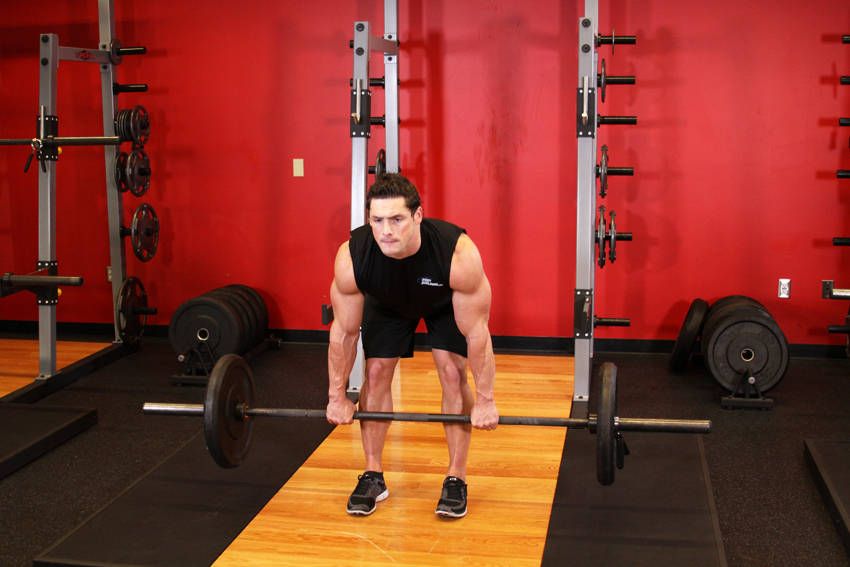
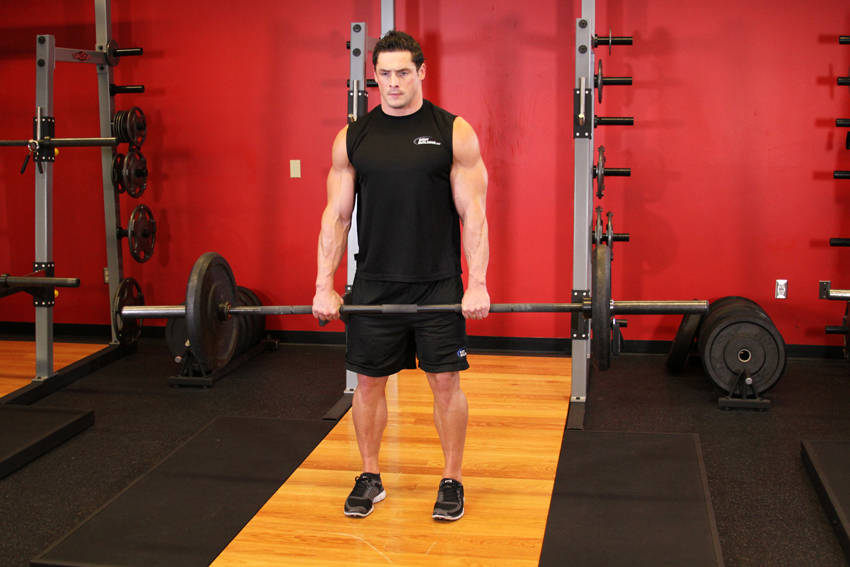
How to Do the Romanian Deadlift
- 1Start standing tall, either unracking the bar or deadlifting it up, holding it at your hips with a shoulder-width grip.
- 2Set your feet hip-width, soften your knees slightly (a 'soft knee' bend you'll hold the whole rep), and brace your core.
- 3Begin the rep by pushing your hips straight back, like closing a car door with your butt, letting the bar slide down your thighs.
- 4Keep the bar in contact with your legs and your back flat as you hinge, lowering until you feel a strong stretch in your hamstrings.
- 5Stop when your hamstring flexibility runs out (usually mid-shin to just below the knee) — do not chase the floor.
- 6Reverse by driving your hips forward and squeezing your glutes to return to a tall standing lockout.
Coaching Cues
Common Mistakes
Variations & Related Lifts
What Lifters Say
Based on 31,000 online discussions
The RDL is one of the most beloved accessory lifts in fitness discussions and strength-training discussions, almost universally recommended as the go-to barbell movement for building hamstrings and glutes. The community loves that it delivers the posterior-chain benefits of deadlifting with a fraction of the recovery cost, which makes it easy to program two or even three times a week. It's also the lift people are pointed to when their conventional deadlift lockout is weak.
The most common confusion the community untangles is RDL vs. conventional vs. stiff-leg. The RDL starts from the top, keeps a fixed soft-knee bend, and stops at a hamstring stretch (not the floor). The stiff-leg deadlift uses straighter (nearly locked) knees and often a fuller range to the floor, putting an even harder stretch on the hamstrings. The conventional deadlift starts from the floor and bends the knees significantly more, making it far more quad- and total-body-driven. The recurring advice is to push your hips back, not down — if your knees travel forward, you're squatting it.
The other constant theme is depth. The consensus is emphatic: range of motion is dictated by your hamstring flexibility, not by hitting the floor. You lower until you feel a strong stretch with a flat back, and the moment your lower back wants to round, you stop and reverse. Keep the bar dragging on your legs, keep the knees soft and unchanging, and use moderate weight you can actually feel in the hamstrings — that's where the magic is.
Why Lifters Love It
- Arguably the best hamstring hypertrophy builder you can do with a barbell.
- Builds glutes hard while also strengthening the lower back in a controlled way.
- Far less fatiguing and CNS-taxing than conventional deadlifts, so easier to recover from.
- Teaches a clean hip-hinge pattern that transfers directly to your conventional and sumo pulls.
Common Pitfalls
- Very easy to do wrong by squatting it down instead of hinging back.
- Hard to load heavy because grip and hamstring flexibility become limiters fast.
- Often confused with stiff-leg deadlifts and good mornings, leading to inconsistent form.
- Limited hamstring mobility caps your range of motion, which frustrates a lot of beginners.
Keep Reading
- Romanian vs Conventional Deadlift — Q&A with Dr. Jordan Feigenbaum — Barbell Medicine Forum
- Barbell Medicine: The 8 Best Glute and Hamstring Exercises — Barbell Medicine
- Romanian Deadlift With Straps? — grip and programming Q&A — Barbell Medicine Forum
Frequently Asked Questions
What's the difference between an RDL, a conventional deadlift, and a stiff-leg deadlift?
How low should I go on RDLs?
How much should my knees bend on an RDL?
Why do I feel RDLs in my lower back instead of my hamstrings?
Should I do RDLs from the floor or from a rack?
Can RDLs replace conventional deadlifts?
Related Exercises
Bodyweight
90/90 Hamstring
Hamstrings · Bodyweight
Kettlebell
Alternating Hang Clean
Hamstrings · Kettlebell
Exercise Ball
Ball Leg Curl
Hamstrings · Exercise Ball
Bands
Band Good Morning
Hamstrings · Bands
Bands
Band Good Morning (Pull Through)
Hamstrings · Bands
Other
Box Jump (Multiple Response)
Hamstrings · Other
Library last reviewed June 22, 2026 · How these guides are written