Kettlebell Swing
Explosive hip snap that builds power and conditioning.
Body Part
Legs
Equipment
Kettlebell
Level
Beginner
Type
Compound
Force
Pull
The kettlebell swing is a ballistic hip hinge where you drive a kettlebell up to chest height using an explosive snap of the hips, not your arms. It's one of the best low-equipment options for building posterior-chain power, conditioning, and grip endurance all at once.
Muscles Worked
In Position
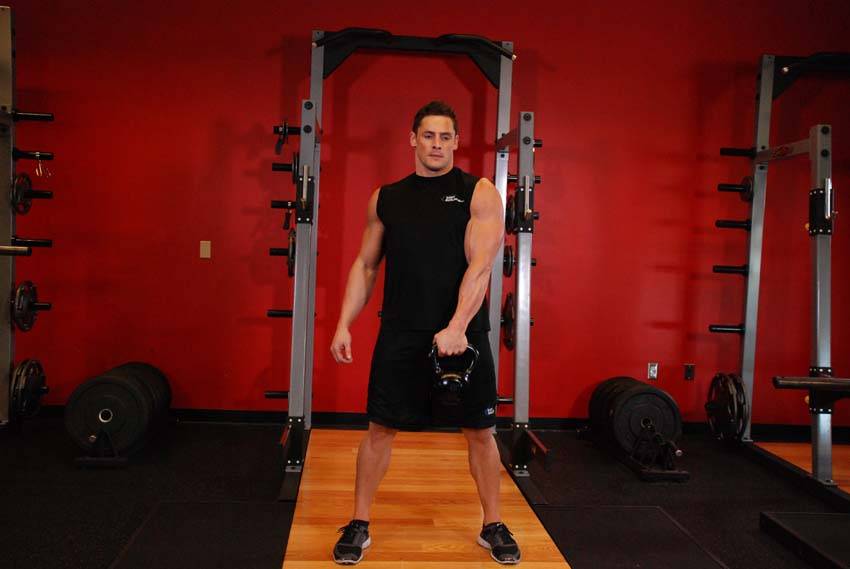
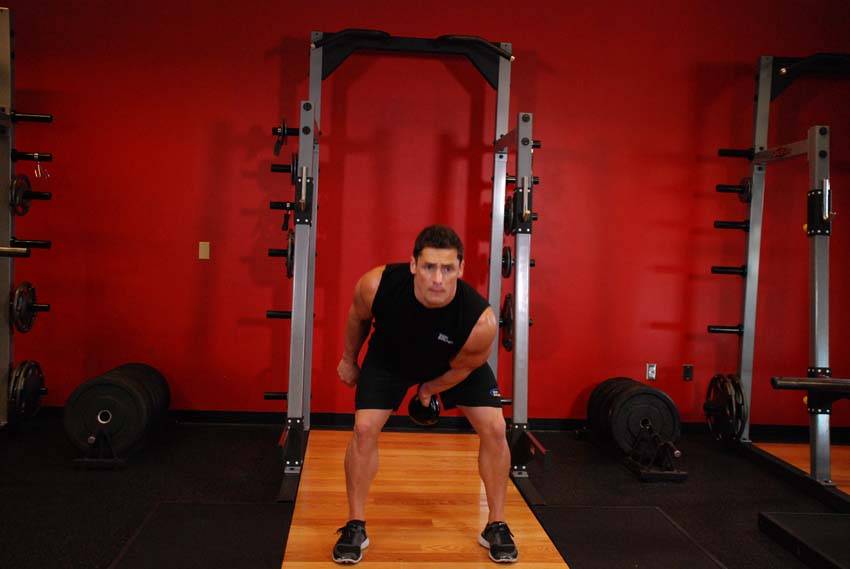
How to Do the Kettlebell Swing
- 1Stand with feet shoulder-width and the kettlebell about a foot in front of you on the floor.
- 2Hinge at the hips, reach forward, and grip the handle with both hands, shoulders pulled back and back flat.
- 3Hike the kettlebell back between your legs like a football snap, loading your hamstrings.
- 4Explosively snap your hips forward and squeeze your glutes hard, letting the momentum float the bell up.
- 5Let the bell rise to about chest height with straight arms — the power comes from your hips, not a front raise.
- 6Let the bell fall back down, absorbing it by hinging your hips back again, and flow straight into the next rep.
Coaching Cues
Common Mistakes
Variations & Related Lifts
What Lifters Say
Based on 22,000 online discussions
The kettlebell swing is a community favorite for power and conditioning, praised across fitness discussions and kettlebell discussions as one of the highest-value movements you can do with a single piece of equipment. Lifters love it for building explosive hips, posterior-chain endurance, and grip, and as a joint-friendly conditioning option that beats slogging on a treadmill. It's a staple of programs like Simple & Sinister and a go-to home-gym movement.
The single most repeated coaching point is that the swing is a hinge, not a squat — and definitely not a front raise. The power comes from explosively snapping your hips forward and squeezing your glutes, which 'floats' the bell up; your arms are just along for the ride. Beginners are constantly reminded to push their hips back (not bend their knees and drop down), to keep a flat back, and to hike the bell high between their legs like a football snap rather than dipping it down toward the knees.
The big ongoing debate is hardstyle vs. American swings. Hardstyle swings stop the bell at chest height and emphasize a crisp, powerful hip snap and hard glute-and-ab brace at the top — the community overwhelmingly favors this as safer and more effective for power. American swings take the bell all the way overhead, which many coaches warn places risky stress on the shoulders and lower back (people tend to hyperextend to get the bell up). Unless you're specifically training for a CrossFit standard, most lifters recommend sticking with chest-height hardstyle swings.
Why Lifters Love It
- Builds explosive hip power and athleticism that carries over to deadlifts and sprinting.
- Excellent conditioning tool — high reps spike your heart rate fast.
- Trains the posterior chain hard with just one piece of equipment.
- Low impact on the joints compared to running for cardio.
Common Pitfalls
- Constantly done wrong as a squat or a front raise instead of a hinge.
- Easy to tweak your lower back if you round it or muscle the bell up with your arms.
- Endless 'hardstyle vs. American' debates that confuse beginners.
- American swings (overhead) put many people's shoulders and backs at risk.
Keep Reading
- StrongFirst: The Perfect Kettlebell Swing — Is There Such a Thing? — StrongFirst
- StrongFirst: Power and Rhythm in the Kettlebell Swing — StrongFirst
- StrongFirst forum: Dan John's 10,000 Swing Workout discussion — StrongFirst Forum
Frequently Asked Questions
Is a kettlebell swing a squat or a hinge?
What's the difference between a hardstyle and an American swing?
How high should the kettlebell go on a swing?
Why does my lower back hurt after kettlebell swings?
How heavy should my kettlebell be for swings?
Are kettlebell swings good for fat loss and conditioning?
Related Exercises
Barbell
Conventional Deadlift
The king of lifts: pick heavy stuff up, put it down.
Barbell
Barbell Hip Thrust
The most direct glute builder there is.
Barbell
Sumo Deadlift
Wide stance, short pull, big hips and quads.
Bodyweight
Ankle On The Knee
Glutes · Bodyweight
Barbell
Barbell Glute Bridge
Glutes · Barbell
Bodyweight
Butt Lift (Bridge)
Glutes · Bodyweight
Library last reviewed June 22, 2026 · How these guides are written