Barbell Hip Thrust
The most direct glute builder there is.
Body Part
Legs
Equipment
Barbell
Level
Beginner
Type
Compound
Force
Push
The barbell hip thrust is a horizontal hip extension where your upper back rests on a bench and you drive a loaded barbell up by squeezing your glutes to a full lockout. Popularized by Bret Contreras, it isolates and overloads the glutes better than almost any other lift, making it a favorite for building strength and size in the posterior.
Muscles Worked
In Position
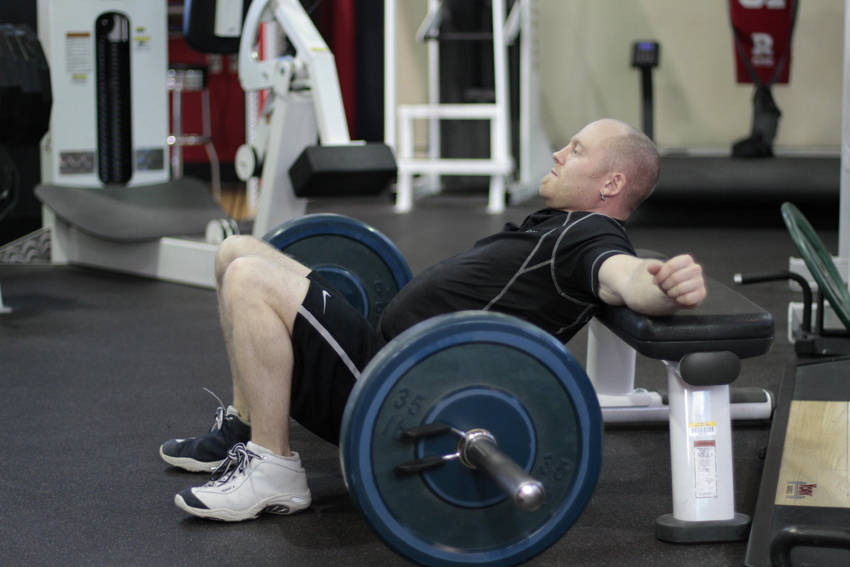
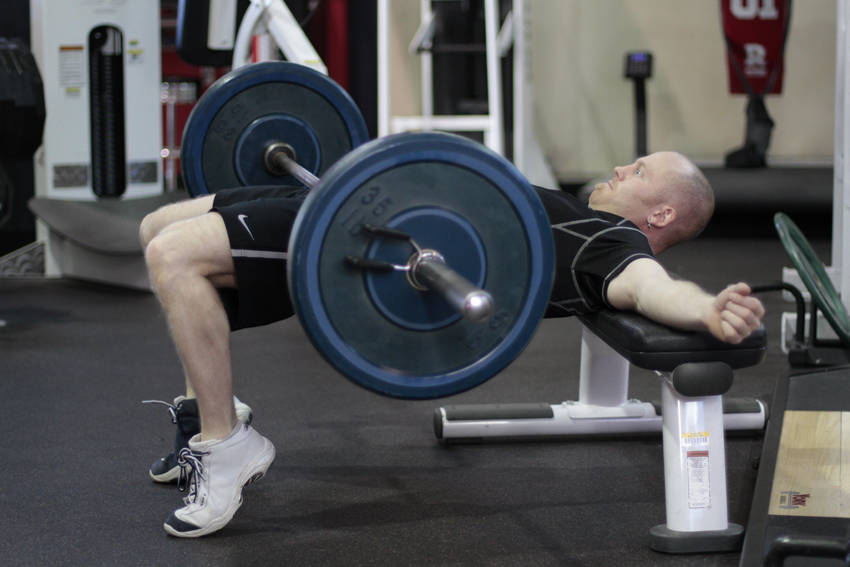
How to Do the Barbell Hip Thrust
- 1Sit on the floor with your upper back against the long edge of a bench and roll a padded barbell into the crease of your hips.
- 2Plant your feet flat, roughly shoulder-width, so that at the top your shins will be vertical (knees stacked over heels).
- 3Tuck your chin and pull your ribs down so your spine is neutral, not arched.
- 4Brace your core, then drive through your heels and squeeze your glutes to lift the bar.
- 5Push your hips all the way up until your torso is parallel to the floor and your knees, hips, and shoulders form a straight line.
- 6Squeeze hard at the top for a beat, then lower under control without resting the bar on the floor between reps.
Coaching Cues
Common Mistakes
Variations & Related Lifts
What Lifters Say
Based on 29,000 online discussions
The barbell hip thrust is widely regarded in fitness discussions and the broader lifting community as the most effective dedicated glute exercise you can do. Lifters love how directly it targets the glutes, how heavy you can load it, and how much it spares the lower back compared to squats and deadlifts. It's a near-mandatory recommendation for anyone whose primary goal is glute size, strength, or a stronger lockout in their other lifts.
The most-discussed form points are all about avoiding lower-back hyperextension. The community consensus is to tuck your chin, pull your ribs down, and finish each rep with a posterior pelvic tilt so the glutes (not the lumbar spine) drive the lockout. People are reminded to look toward their knees rather than crane their neck back, to drive through the heels, and to set their feet so the shins end up vertical at the top. Full lockout with a hard glute squeeze is emphasized as where the magic happens.
The other universal theme is the 'gym-awkwardness factor.' Lots of lifters admit they avoided hip thrusts for ages because the setup feels exposed and the in-and-out from under a loaded bar is clumsy. The community's reassurance is consistent: nobody's watching, a good hip pad solves the bar-digging problem, and bracing the bench against a wall or rack stops it from sliding. Push past the self-consciousness and it quickly becomes one of the most rewarding lifts for the posterior.
Why Lifters Love It
- The single most direct and effective glute-builder available — nothing isolates them better.
- Easy to overload progressively since the glutes can handle a lot of weight.
- Very back-friendly compared to squats and deadlifts when done with a neutral spine.
- Strong mind-muscle connection — you really feel the glutes working.
Common Pitfalls
- Awkward and self-conscious to set up in a busy gym, especially the hip crease position.
- Getting in and out from under a heavy bar is clumsy and sometimes embarrassing.
- Requires a pad or the bar digs painfully into your hip bones.
- Easy to hyperextend the lower back instead of locking out with the glutes.
Keep Reading
- Bret Contreras: How to Hip Thrust — setup, execution, common mistakes — Bret Contreras
- Bret Contreras: 10 Steps to the Perfect Hip Thrust — Bret Contreras
- Bret Contreras: Hip Thrust Wiki — biomechanics, technique, research — Bret Contreras
Frequently Asked Questions
Why does my lower back hurt during hip thrusts instead of my glutes?
Where should my feet go on a hip thrust?
How do I keep the bar from hurting my hips?
Are hip thrusts better than squats for glutes?
How do I set up a hip thrust without it feeling so awkward?
How much should I be able to hip thrust?
Related Exercises
Barbell
Conventional Deadlift
The king of lifts: pick heavy stuff up, put it down.
Barbell
Sumo Deadlift
Wide stance, short pull, big hips and quads.
Kettlebell
Kettlebell Swing
Explosive hip snap that builds power and conditioning.
Bodyweight
Ankle On The Knee
Glutes · Bodyweight
Barbell
Barbell Glute Bridge
Glutes · Barbell
Bodyweight
Butt Lift (Bridge)
Glutes · Bodyweight
Library last reviewed June 22, 2026 · How these guides are written