Bulgarian Split Squat
The most hated, most effective leg builder
Body Part
Legs
Equipment
Dumbbell
Level
Intermediate
Type
Compound
Force
Push
The Bulgarian split squat is a single-leg squat with your rear foot elevated on a bench, concentrating the load onto the front leg's quad and glute through a long, deep range of motion. It's famous for being brutally effective and brutally uncomfortable, building leg size, single-leg strength, and balance while exposing and fixing left-to-right imbalances. Because it's loaded with dumbbells, it spares your spine compared to heavy bilateral squats.
Muscles Worked
In Position
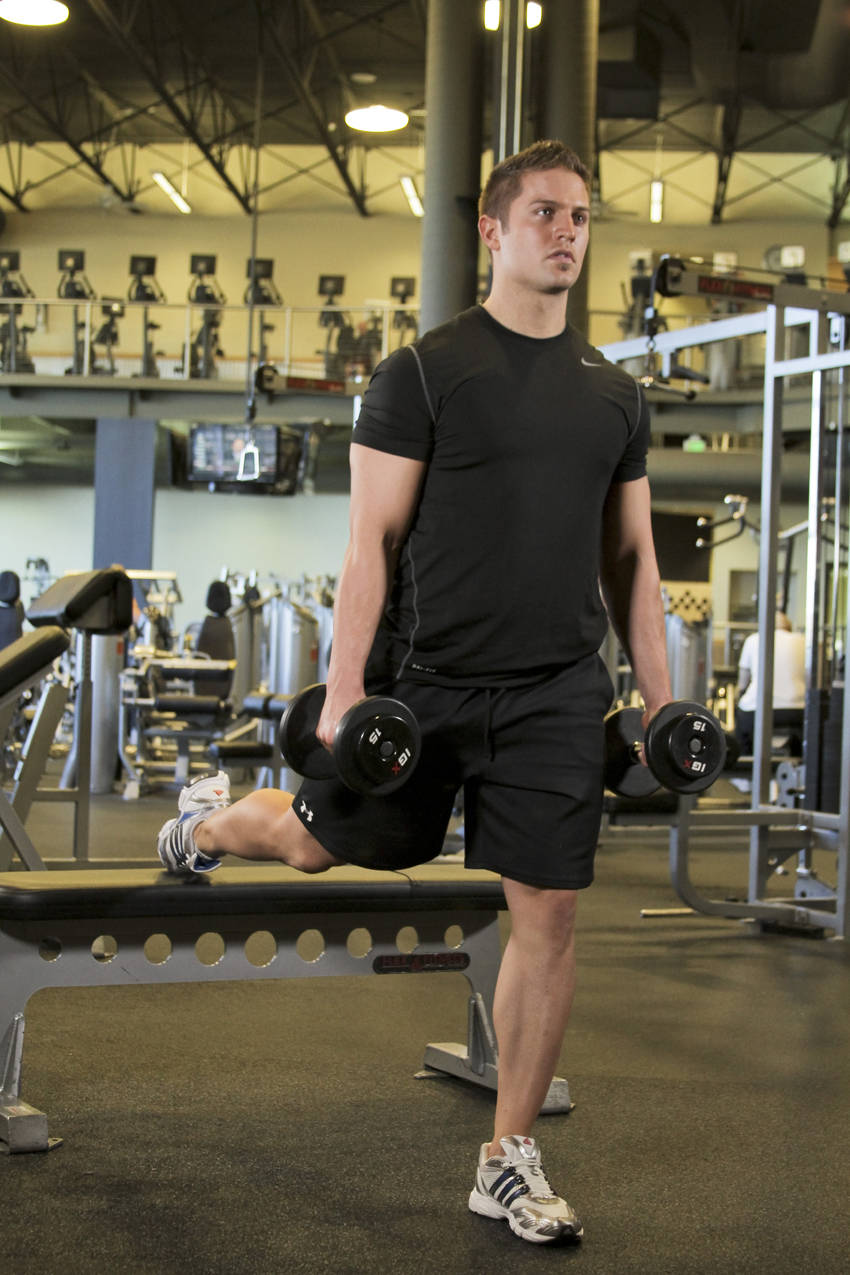
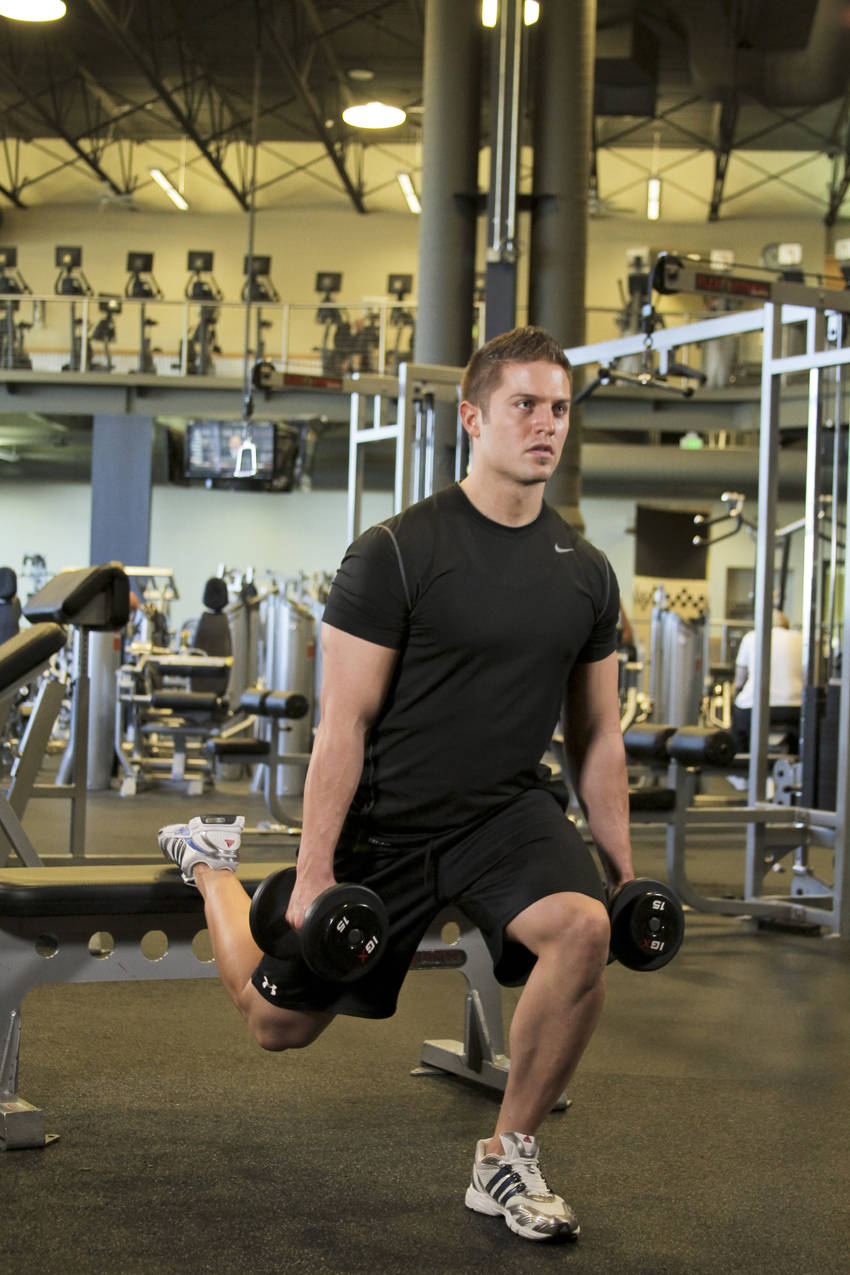
How to Do the Bulgarian Split Squat
- 1Stand a couple of feet in front of a bench holding a dumbbell in each hand, then place the top of your rear foot (laces down) on the bench behind you.
- 2Adjust your front foot forward or back so that at the bottom your front shin is roughly vertical to slightly inclined and your knee tracks over your foot.
- 3Square your hips, brace your core, and keep your torso tall or with a slight forward lean depending on whether you want more quad or glute emphasis.
- 4Lower straight down by bending your front knee and hip, letting the rear knee drift toward the floor until your front thigh is at or below parallel.
- 5Keep your weight on the heel and midfoot of the front leg, not the rear foot, throughout the descent.
- 6Drive up through the front foot to stand, stopping just short of locking out to keep tension, then complete all reps before switching legs.
Coaching Cues
Common Mistakes
Variations & Related Lifts
What Lifters Say
Based on 26,000 online discussions
The Bulgarian split squat has a reputation as the lift everyone hates but no one can argue with — the community consensus is that it's one of the most effective single-leg builders in existence. By isolating one leg with the rear foot elevated, it concentrates a huge stimulus on the front-leg quad and glute through a deep stretch while sparing your spine. People dread it precisely because it works so well.
In practice, expect humbling weights and a special kind of misery: balance limits you early, the local burn is intense, and you'll often be gasping for air by the end of a set. Most lifters program it as a primary or secondary leg movement once or twice a week, building from bodyweight or light dumbbells until the balance clicks, then loading progressively. Grip frequently becomes the bottleneck with heavy dumbbells, so straps or a barbell are common upgrades.
The Bulgarian split squat is best for lifters chasing leg mass, athletes needing single-leg strength, and anyone fixing side-to-side imbalances or protecting a touchy lower back. The main form debate is quad versus glute bias: a more vertical shin and upright torso emphasizes the quad, while a longer front-foot stance and slight forward lean shifts load to the glute. Compared to walking lunges it's more stable and stretch-loaded but more balance-demanding; compared to the back squat it offers similar leg growth with dramatically less spinal stress at the cost of loadable maximal strength.
Why Lifters Love It
- Builds serious quad and glute size with far less spinal load than heavy barbell squats
- Exposes and corrects left-right strength imbalances because each leg works independently
- Long, deep range of motion under stretch is a powerful hypertrophy stimulus, especially for the glutes
- Big strength and athletic carryover to sprinting, jumping, and change of direction
Common Pitfalls
- Genuinely miserable — the burn and breathlessness make it one of the most hated lifts in the gym
- Balance and stability are limiting at first, so it takes practice before you can really load it
- Grip and forearms often fail before the legs when going heavy with dumbbells
- Rear foot and ankle can get uncomfortable or cramp on the bench, especially with hard shoes
Keep Reading
- Bret Contreras: The Bulgarian Split Squat Solution — Bret Contreras
- Bulgarian or Regular? — Q&A with Dr. Jordan Feigenbaum — Barbell Medicine Forum
- Bulgarian Split Squat Depth — front-foot vs rear-foot elevation — Barbell Medicine Forum
Frequently Asked Questions
Why does everyone hate Bulgarian split squats so much?
How do I make Bulgarian split squats more quad or more glute focused?
How do I keep my balance during Bulgarian split squats?
How high should the bench be for Bulgarian split squats?
Are Bulgarian split squats better than regular squats?
What can I use if grip gives out before my legs?
Related Exercises
Barbell
Barbell Back Squat
The king of lower-body lifts
Barbell
Front Squat
Upright squatting for monster quads
Dumbbell
Goblet Squat
The best squat to learn the squat
Dumbbell
Walking Lunge
Single-leg strength on the move
Bodyweight
All Fours Quad Stretch
Quads · Bodyweight
Bodyweight
Alternate Leg Diagonal Bound
Quads · Bodyweight
Library last reviewed June 22, 2026 · How these guides are written