Barbell Back Squat
The king of lower-body lifts
Body Part
Legs
Equipment
Barbell
Level
Intermediate
Type
Compound
Force
Push
The barbell back squat loads the entire lower body and trunk under a bar racked across your upper back, making it the gold-standard movement for building raw strength and leg mass. It's a foundational lift in nearly every serious program because it trains the quads, glutes, hamstrings, and core through a long, heavily loaded range of motion. Few exercises offer as much return on effort for athletic carryover and whole-body development.
Muscles Worked
In Position
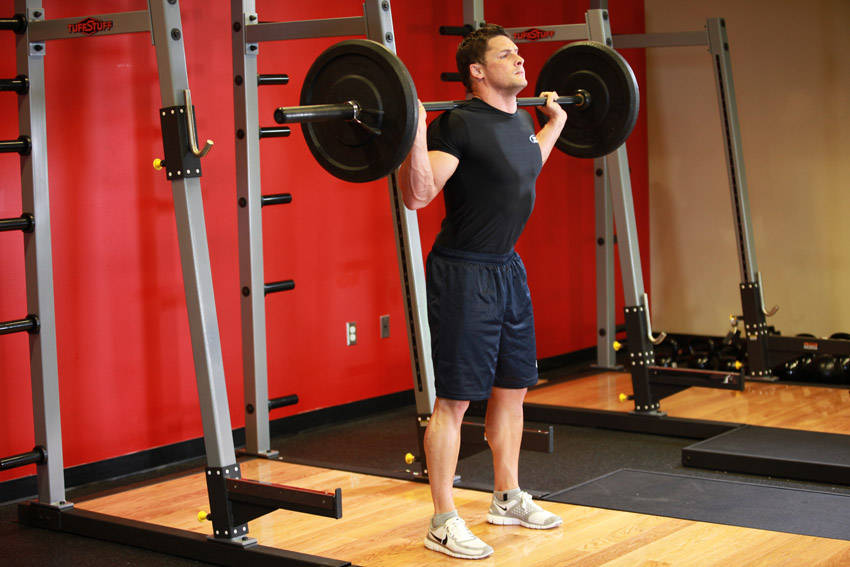
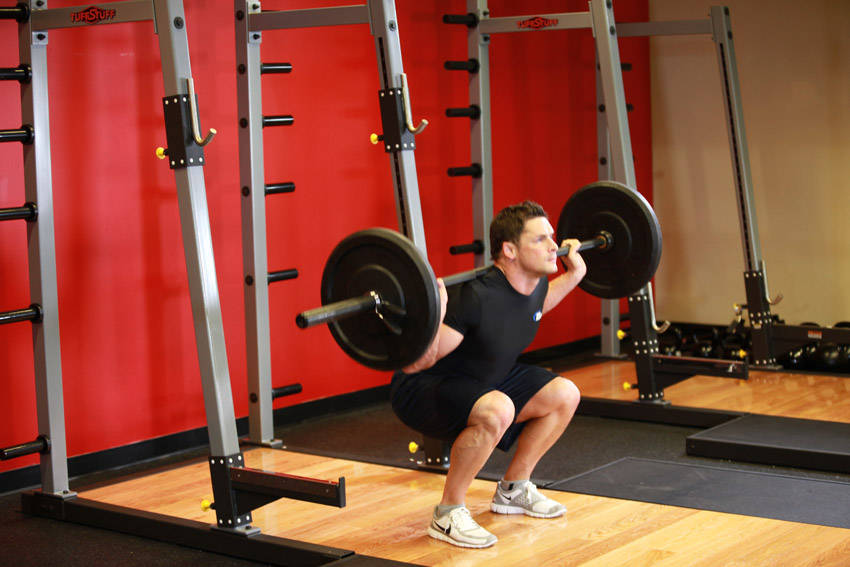
How to Do the Barbell Back Squat
- 1Set the bar in the rack at roughly mid-chest height, then duck under and place it across your traps (high-bar) or the rear delt shelf (low-bar), pulling your elbows down to create a muscular shelf.
- 2Grip the bar evenly just outside shoulder width, squeeze your upper back tight, and stand up to unrack it by extending your hips and knees together.
- 3Take two or three controlled steps back and set your feet shoulder-width to slightly wider, toes turned out about 15-30 degrees.
- 4Take a big breath into your belly, brace your core hard against your belt or as if bracing for a punch, and keep your whole foot planted.
- 5Break at the hips and knees simultaneously and descend under control, pushing your knees out in line with your toes until your hip crease drops below the top of your knee.
- 6Drive through your midfoot and stand back up, keeping your chest and hips rising together and your knees tracking out, then exhale near the top and reset for the next rep.
Coaching Cues
Common Mistakes
Variations & Related Lifts
What Lifters Say
Based on 48,000 online discussions
The back squat earns its nickname as the king of lifts for a reason — almost everyone in the lifting world agrees it's one of the highest-value movements you can do. It loads the quads, glutes, and entire posterior chain while forcing your core to stabilize hundreds of pounds, and that combination of mechanical tension and systemic stress is why beginner programs are built around it. Community sentiment is overwhelmingly positive; the debates are about how to squat, not whether to.
In practice, the squat is humbling. It feels great when grooved and miserable when your mobility or bracing is off, and heavy sessions leave you genuinely fatigued for a day or two. Most lifters run it 1-3 times per week, progressing in small jumps early on, then shifting to periodized or RPE-based loading once linear gains stall. Expect to spend real time dialing in depth, brace, and knee tracking — the lift rewards patience and punishes ego.
The back squat is best for anyone chasing strength, leg mass, or athletic power, which is nearly everyone. The biggest ongoing debate is low-bar versus high-bar: low-bar shifts load to the hips and lets you lift more, favoring powerlifters, while high-bar stays more upright and quad-dominant, favoring bodybuilders, weightlifters, and general athletes. Compared to the front squat it's heavier and more posterior-chain biased, and compared to leg press it offers far more functional and core carryover at the cost of higher skill and risk.
Why Lifters Love It
- Builds total-body strength and slabs of quad and glute mass faster than almost any other single movement
- Heavy systemic loading drives a strong hormonal and growth stimulus that carries over to the whole physique
- Directly transfers to athletic power, jumping, and sprinting better than machine leg work
- Easy to progressively overload in small jumps, which makes linear beginner programs like StrongLifts and Starting Strength work so well
Common Pitfalls
- Technically demanding — small breakdowns under heavy load can stress the lower back if bracing or depth is off
- Requires a power rack with safeties or spotter arms to fail safely, which not every home or hotel gym has
- Bar position on the traps or rear delts can be uncomfortable until you build the muscular shelf and callous to it
- Limited ankle or hip mobility makes hitting depth without buttwink frustrating for many lifters
Keep Reading
- PowerliftingToWin: Powerlifting Squat Technique — PowerliftingToWin
- Stronglifts: How to Squat with Proper Form — The Definitive Guide — Stronglifts
- Barbell Medicine: Does Bar Placement In The Squat Matter? — Barbell Medicine
Frequently Asked Questions
How low should I squat — is ass-to-grass full depth safe and necessary?
What's the difference between low-bar and high-bar squats and which should I do?
Why do my knees cave in when I squat heavy?
Should my knees go past my toes when squatting?
Do I need a belt to squat?
How often should I squat per week?
Related Exercises
Dumbbell
Bulgarian Split Squat
The most hated, most effective leg builder
Barbell
Front Squat
Upright squatting for monster quads
Dumbbell
Goblet Squat
The best squat to learn the squat
Dumbbell
Walking Lunge
Single-leg strength on the move
Bodyweight
All Fours Quad Stretch
Quads · Bodyweight
Bodyweight
Alternate Leg Diagonal Bound
Quads · Bodyweight
Library last reviewed June 22, 2026 · How these guides are written