Front Squat
Upright squatting for monster quads
Body Part
Legs
Equipment
Barbell
Level
Advanced
Type
Compound
Force
Push
The front squat racks the bar across the front of your shoulders, forcing a far more upright torso than the back squat and shifting the load directly onto your quads. That upright position also demands a braced, strong core and upper back, making it a favorite of weightlifters and anyone chasing quad development with less lower-back strain. It's harder to load than a back squat, but what it teaches about position and bracing is worth the trouble.
Muscles Worked
In Position
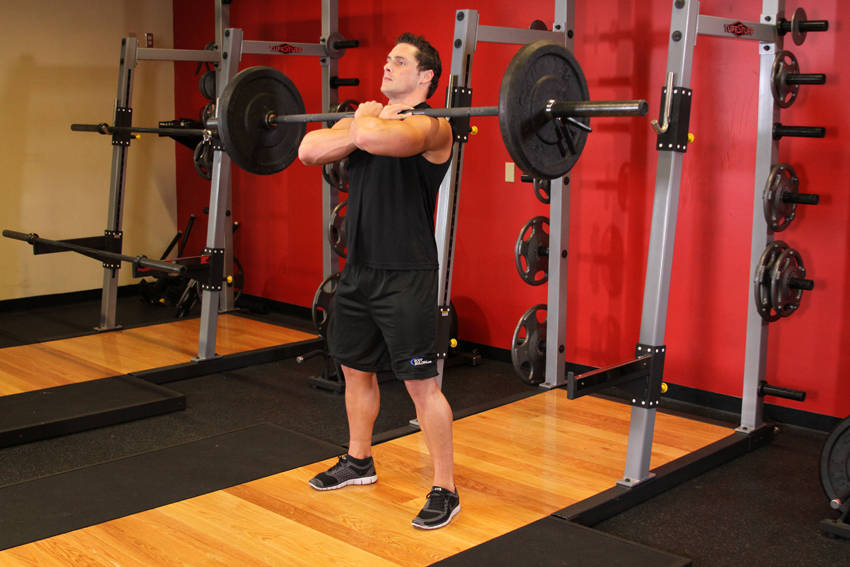
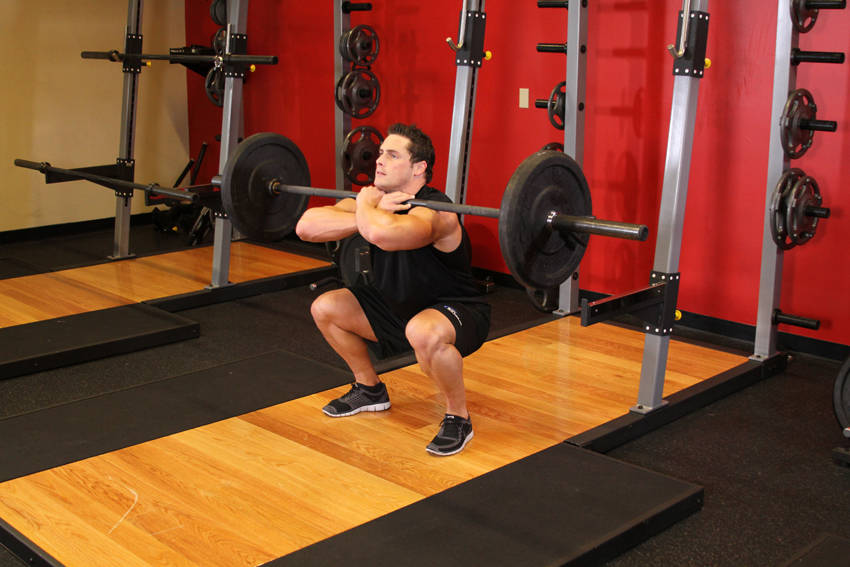
How to Do the Front Squat
- 1Set the bar in the rack at upper-chest height and choose your rack position — clean grip (fingers under the bar, elbows high) or cross-arm grip (arms crossed, hands pressing the bar onto the shoulders).
- 2Step in so the bar rests on the front of your shoulders and across your throat area, not in your hands; the shoulders carry the weight, not the wrists.
- 3Drive your elbows up and forward until your upper arms are roughly parallel to the floor, creating a stable shelf, then unrack and step back.
- 4Set your feet about shoulder-width with toes slightly out, take a big breath into your belly, and brace hard.
- 5Sit straight down with an upright torso, keeping your elbows high and knees tracking over your toes, until your hip crease drops below your knees.
- 6Drive up through the midfoot, fighting to keep the elbows high and chest tall the whole way, then exhale and reset at the top.
Coaching Cues
Common Mistakes
Variations & Related Lifts
What Lifters Say
Based on 19,000 online discussions
The front squat is widely respected as the best barbell squat for isolating the quads while sparing the lower back, and the community treats it as a near-essential complement to the back squat rather than a replacement. By racking the bar in front, it forces an upright torso that loads the knees and quads heavily and turns your core and upper back into the limiting factors. Lifters who push through the awkward learning phase almost always come to love it.
In practice, the front squat humbles you with lighter weights than you expect — the upright position and the demand to keep your elbows high mean your upper back and trunk fatigue fast. Most people program it as a secondary squat once or twice a week, often in moderate rep ranges, and treat the first month as mobility and skill acquisition. Expect wrist and front-rack discomfort early; it usually fades as mobility improves and you learn to let the shoulders, not the hands, carry the bar.
Front squats are best for quad-focused lifters, weightlifters, and anyone whose lower back doesn't tolerate heavy back squatting well. The main form debate is clean grip versus cross-arm grip — clean grip is more stable and standard but demands wrist and lat mobility, while cross-arm is more accessible but tends to let the elbows drop. Compared to the back squat it's more quad-dominant and back-friendly but allows less load; compared to the goblet squat it's the heavy, advanced progression of the same upright pattern.
Why Lifters Love It
- Hammers the quads harder than the back squat because the upright torso keeps the load over the knees
- Far easier on the lower back since the bar sits in front and the spine stays more vertical
- Builds a brutally strong core and upper back that have to fight to keep you upright under load
- Carries over directly to the clean and Olympic lifts, which is why weightlifters live on it
Common Pitfalls
- Front rack position causes wrist, elbow, and shoulder discomfort for lifters with limited mobility
- You can load far less weight than a back squat, which frustrates strength-focused lifters
- The upper back and elbows often fail before the legs, capping how hard you can train the quads
- Steep learning curve — getting a stable rack and staying upright takes weeks of practice
Keep Reading
- Squat University: How To Perfect The Front Squat — Squat University
- StrongFirst forum: Front squat rack position & form thread — StrongFirst Forum
- Breaking Muscle: The Front Squat — How to Get It Right — Breaking Muscle
Frequently Asked Questions
Clean grip vs cross-arm grip for front squats — which is better?
How do I fix wrist pain during front squats?
Why is the front squat more quad-dominant than the back squat?
How much less can I front squat compared to my back squat?
My elbows keep dropping during front squats — how do I fix it?
Can front squats replace back squats?
Related Exercises
Barbell
Barbell Back Squat
The king of lower-body lifts
Dumbbell
Bulgarian Split Squat
The most hated, most effective leg builder
Dumbbell
Goblet Squat
The best squat to learn the squat
Dumbbell
Walking Lunge
Single-leg strength on the move
Bodyweight
All Fours Quad Stretch
Quads · Bodyweight
Bodyweight
Alternate Leg Diagonal Bound
Quads · Bodyweight
Library last reviewed June 22, 2026 · How these guides are written