Lat Pulldown
The accessible path to wider lats
Body Part
Back
Equipment
Machine
Level
Beginner
Type
Compound
Force
Pull
The lat pulldown is a cable machine staple that mimics the pull-up's vertical pulling pattern with fully adjustable load, making it the perfect lat builder for anyone who can't yet do bodyweight pull-ups. You sit anchored under a thigh pad and pull a bar down to your upper chest, driving your elbows down to light up the lats. It's beginner-friendly, easy to load precisely, and ideal for high-quality, mind-muscle lat training.
Muscles Worked
In Position
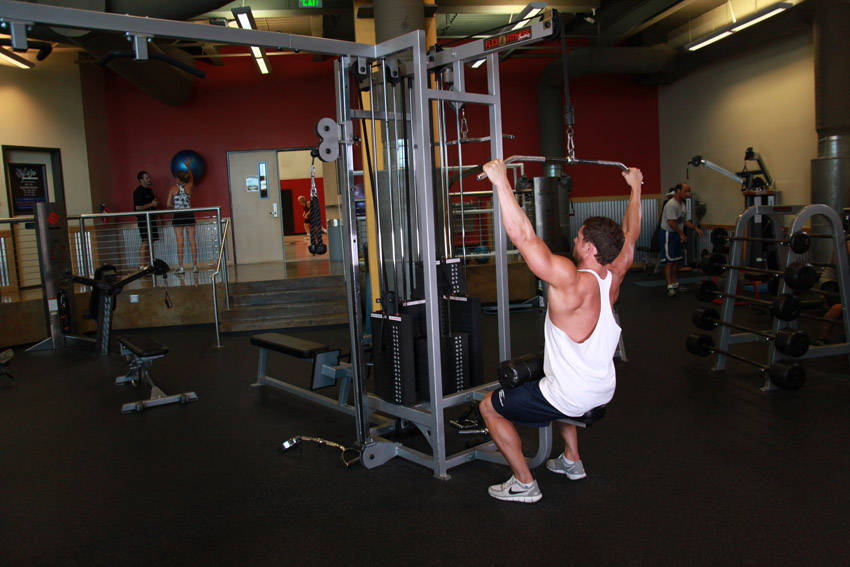
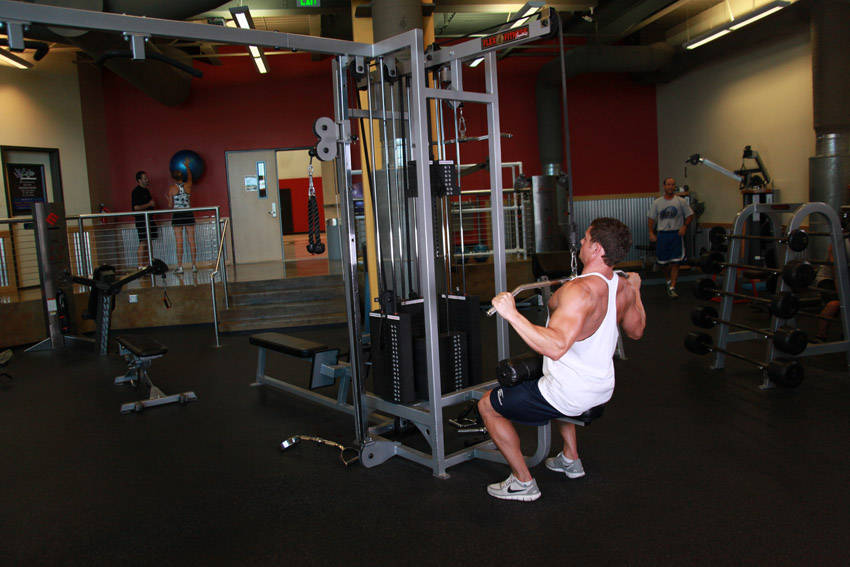
How to Do the Lat Pulldown
- 1Set the thigh pad so your knees are pinned snugly under it and your feet are flat on the floor.
- 2Grab the bar with a pronated grip slightly wider than shoulder-width, then sit down so your arms are fully extended and your lats are stretched.
- 3Sit tall with a slight backward lean (around 10-20 degrees), chest up, and brace your core.
- 4Initiate by depressing your shoulder blades, then pull the bar down toward your upper chest by driving your elbows down and toward your ribs.
- 5Touch the bar to your upper chest, squeezing your lats and pulling your shoulder blades down and together without leaning way back.
- 6Control the bar back up to a full stretch, letting your shoulders rise slightly at the top before the next rep.
Coaching Cues
Common Mistakes
Variations & Related Lifts
What Lifters Say
Based on 8,400 online discussions
The lat pulldown is the community's default answer for two questions: how to build lats when you can't do pull-ups, and how to add controllable, high-rep vertical pulling volume. Lifters appreciate that it's low-skill, infinitely adjustable, and lets you really chase a lat pump with a strong mind-muscle connection. It's almost universally recommended as the best pull-up substitute and a key tool in any plan to earn your first bodyweight rep.
The most common technique debates are grip width, lean, and where you pull the bar. The consensus is to pull to the upper chest (not behind the neck and not down to the belly), keep your torso lean modest at around 10-20 degrees so it doesn't morph into a row, and drive the elbows down to lead with the lats rather than the arms. Grip width comes up a lot — a slightly-wider-than-shoulder pronated grip is the standard for lat width, while neutral and close grips give a stronger contraction and a bit more biceps.
The recurring criticism is that it's easy to make a lat pulldown a worse exercise than it should be. People pile on weight, lean way back, and heave the bar with momentum, which turns a lat builder into a sloppy row. The advice that keeps showing up is to lighten the load, depress the shoulder blades to start each rep, control the negative, and actually feel the lats. Treated that way, the lat pulldown earns its place as one of the most reliable back-width builders in the gym.
Why Lifters Love It
- Scales load precisely, so anyone can train the vertical pull regardless of strength
- The single best substitute and stepping stone for building toward pull-ups
- Easy to feel and isolate the lats for strong mind-muscle connection
- The thigh pad anchors you so you can really overload without flying off the seat
Common Pitfalls
- Doesn't build the same total-body and grip strength as real pull-ups
- Very easy to cheat by leaning back and heaving the weight
- Behind-the-neck variations can irritate or risk the shoulders
- Carryover to actual pull-ups is good but not one-to-one
Keep Reading
- Barbell Medicine: Lat Pulldowns for Hypertrophy — Barbell Medicine
- NASM: The Biomechanics of the Lat Pulldown — NASM
- Pull-up or lat pulldown? — programming Q&A — Barbell Medicine Forum
Frequently Asked Questions
What grip width is best for lat pulldowns?
Should I lean back during lat pulldowns?
Where should I pull the bar — chest or behind the neck?
How do I actually feel my lats during pulldowns?
Is the lat pulldown a good substitute for pull-ups?
How heavy should I go on lat pulldowns?
Related Exercises
Library last reviewed June 22, 2026 · How these guides are written