Incline Dumbbell Press
Build that upper-chest shelf
Body Part
Chest
Equipment
Dumbbell
Level
Intermediate
Type
Compound
Force
Push
The incline dumbbell press is the go-to movement for developing the often-lagging upper chest, and the dumbbells let each arm move freely through a deeper, more natural range than a barbell. It's a favorite for hypertrophy because it stretches the pecs hard at the bottom while sparing the shoulders, making it one of the most reliable upper-chest builders out there.
Muscles Worked
In Position
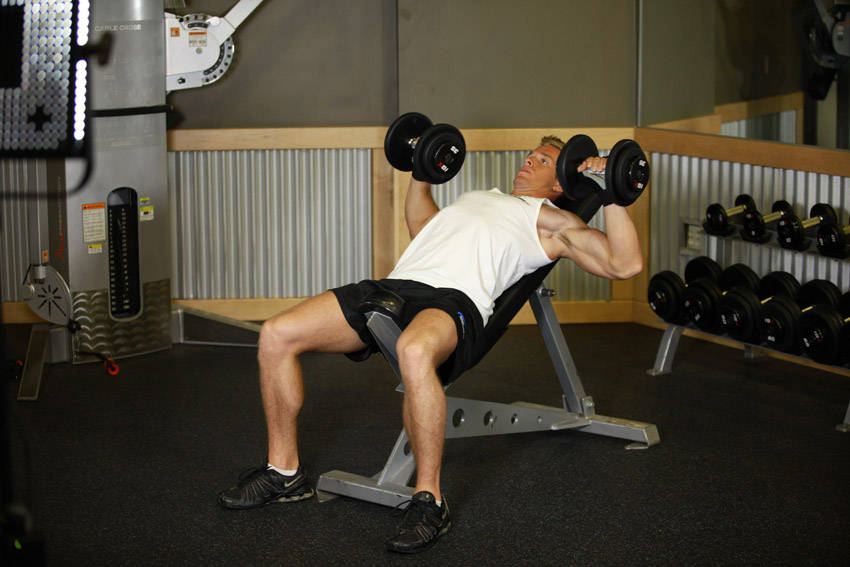
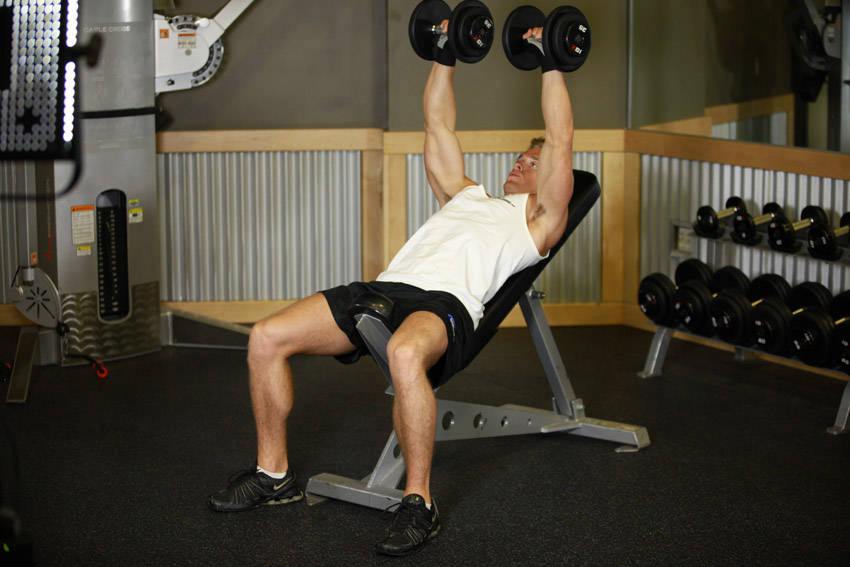
How to Do the Incline Dumbbell Press
- 1Set the bench to a low incline, roughly 15 to 30 degrees; steeper than about 45 degrees turns it into mostly a front-delt exercise.
- 2Sit on the end of the bench with a dumbbell standing on each knee, then kick one knee up at a time to hip the dumbbells back as you lie down.
- 3Settle with your shoulder blades pulled down and back into the pad and your feet planted firmly on the floor.
- 4Start with the dumbbells over your upper chest, palms facing forward or slightly angled in, elbows tucked to around 45 degrees.
- 5Lower under control until you feel a deep stretch across the upper chest, letting the elbows drop to about the level of your torso.
- 6Press the dumbbells up and slightly together over your upper chest without clanking them, then control the next rep without losing your shoulder set.
Coaching Cues
Common Mistakes
Variations & Related Lifts
What Lifters Say
Based on 21,000 online discussions
If you ask the lifting community how to build a complete, full-looking chest, the incline dumbbell press is almost always in the answer. The upper chest is a stubborn area for a lot of people, and the flat bench alone rarely fills it in. The incline angle shifts the emphasis up toward the clavicular pecs, and the dumbbells add a deep stretch and an independent arm path that the barbell simply can't match.
The single biggest debate is the bench angle. The consensus settles around a low incline of 15 to 30 degrees for upper-chest emphasis; once you ramp up toward 45 degrees or higher, the front delts take over and it stops being a chest movement. The other recurring theme is the bottom stretch: lifters love incline dumbbell work for the deep pec stretch it provides, but warn that going too heavy or too deep is where shoulders get cranky, so control matters more than load.
The practical gripes are mostly about logistics. Getting heavy dumbbells up to your shoulders is genuinely the hardest part for many people, so the knee-kick technique gets recommended constantly. Progression is also clunkier than a barbell because dumbbells jump in big increments. Most people work around that with rep progression and slow eccentrics rather than chasing weight. Treated as a controlled hypertrophy movement rather than an ego lift, it's one of the most loved chest exercises around.
Why Lifters Love It
- One of the most effective upper-chest builders for filling out that lagging shelf below the collarbone
- Dumbbells let each arm move through a deeper, more natural range with a big pec stretch at the bottom
- Free arm path is generally easier on the shoulders than a fixed barbell
- Fixes left-right strength imbalances since each side works independently
Common Pitfalls
- Getting heavy dumbbells into the starting position is awkward and a common limiter
- Setting the incline too steep accidentally turns it into a front-delt exercise
- Stabilizing two independent weights caps how heavy you can go versus a barbell
- The bottom stretch can aggravate cranky shoulders if you go too deep or too heavy
Keep Reading
- Barbell Medicine: Incline Press for Chest Hypertrophy — Barbell Medicine
- RP Strength: Complete Chest Training Guide (Dr. Mike Israetel) — RP Strength
- Barbell Medicine: Upper vs Lower Chest — What Matters for Hypertrophy — Barbell Medicine
Frequently Asked Questions
What's the best incline angle for upper chest?
How do I get heavy dumbbells into position safely?
Is incline dumbbell or incline barbell better for upper chest?
Why do I feel incline press in my shoulders instead of my chest?
How low should I lower the dumbbells?
Should the dumbbells touch at the top?
Related Exercises
Barbell
Barbell Bench Press
The king of upper-body pressing strength
Bodyweight
Dips
The upper-body squat for chest and triceps
Kettlebell
Alternating Floor Press
Chest · Kettlebell
Dumbbell
Around The Worlds
Chest · Dumbbell
Barbell
Barbell Bench Press - Medium Grip
Chest · Barbell
Barbell
Barbell Guillotine Bench Press
Chest · Barbell
Library last reviewed June 22, 2026 · How these guides are written