Barbell Bench Press
The king of upper-body pressing strength
Body Part
Chest
Equipment
Barbell
Level
Intermediate
Type
Compound
Force
Push
The barbell bench press is the most popular upper-body lift on the planet and the standard test of pressing strength, training the chest, triceps, and front delts as one coordinated unit. Done right, it lets you load more weight than almost any other chest movement, but it's also the most frequently butchered lift in the gym thanks to bouncing, flared elbows, and chasing numbers over technique.
Muscles Worked
In Position
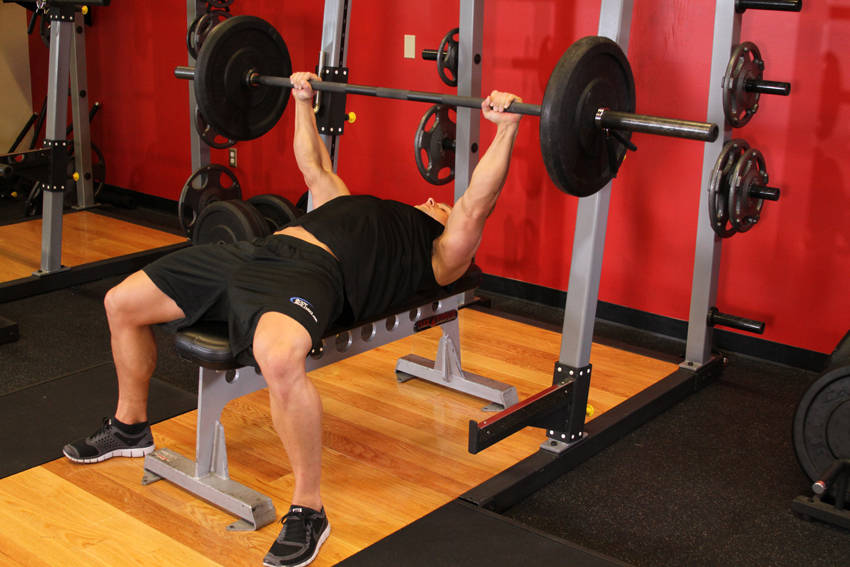
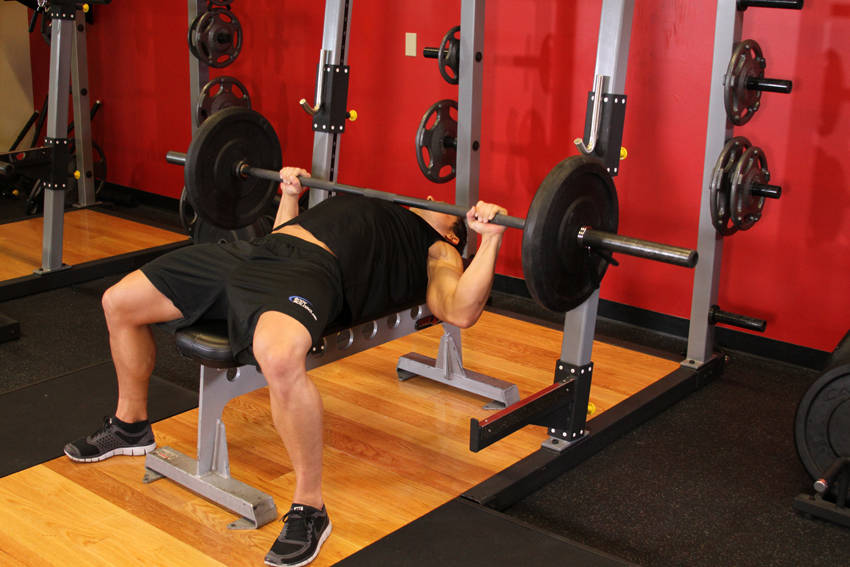
How to Do the Barbell Bench Press
- 1Lie on the bench with your eyes roughly under the bar, plant your feet flat and pull them back so your shins are near-vertical, and squeeze your shoulder blades down and back into the pad.
- 2Grip the bar slightly wider than shoulder-width (forearms vertical at the bottom is the gold standard), wrap your thumbs around it, and stack the bar over the base of your palm, not your fingers.
- 3Unrack by straightening your arms and moving the bar out over your shoulders/upper chest; don't drag it forward from the hooks with bent arms.
- 4Lower the bar under control to your lower chest (around the nipple line / bottom of the sternum), keeping your elbows tucked to roughly 45-75 degrees rather than flared straight out.
- 5Lightly touch the chest without bouncing, then press the bar up and slightly back so it finishes over your shoulders, driving your feet into the floor for leg drive.
- 6Lock out at the top with your shoulder blades still retracted, then reset your breath and tightness before the next rep.
Coaching Cues
Common Mistakes
Variations & Related Lifts
What Lifters Say
Based on 48,000 online discussions
The barbell bench press is the default benchmark for upper-body strength, and for good reason: nothing else lets you move this much weight while training the chest, triceps, and front delts at once. The community treats it almost like a religion, which is both its strength and its curse. There's a near-infinite amount of coaching available, but there's also enormous pressure to chase a big number, and that's where most people go wrong.
The overwhelming consensus is that technique is everything here. Retract your shoulder blades, set a stable arch, keep your feet planted for leg drive, and tuck your elbows so the bar path stays efficient and your shoulders stay healthy. Most of the horror stories about wrecked shoulders trace back to flaring the elbows straight out, benching with rounded shoulders, or just doing too much heavy volume too often. Lifters who pause their reps and respect full range of motion tend to build strength that actually sticks, while bouncers hit walls fast.
If there's a recurring frustration, it's that bench is stubborn. It often feels weak relative to your squat and deadlift, it stalls early, and progress comes in small increments. The fix the community keeps coming back to is more frequency, dialed-in technique, and targeted accessory work (close-grip, dips, overhead pressing, and triceps) to attack your specific sticking point. Treat it as a skill, not just a strength test, and it rewards patience.
Why Lifters Love It
- Lets you load heavier than any other chest movement, so it's the fastest path to raw pressing strength
- One of the three powerlifting competition lifts, with endless programming and progression resources
- Builds the chest, triceps, and front delts together in a single time-efficient compound
- Bar path is fixed, so it's easy to track progress and add small jumps with microplates
Common Pitfalls
- Cranky front delts and the dreaded 'bench shoulder' are extremely common, usually from flaring or too much volume
- It's the most ego-driven lift in the gym, so people sacrifice form and full ROM to add plates
- Requires a spotter or safety pins to push close to failure safely
- Barbell locks both arms into one path, which can aggravate people with shoulder or AC-joint issues
Keep Reading
- Barbell Medicine: How-To Bench Press — Technique, Benefits, and Muscles Worked — Barbell Medicine
- PowerliftingToWin: Bench Press Technique for Powerlifting — PowerliftingToWin
- Westside Barbell: Barbell Bench Press Guide — Techniques, Benefits & Tips — Westside Barbell
Frequently Asked Questions
How much arch is okay when benching?
What grip width should I use on the bench press?
Should you touch your chest, and where should the bar go?
Flared or tucked elbows, which is correct?
Why do my wrists hurt when I bench?
What is leg drive and why does my bench feel so weak?
Related Exercises
Dumbbell
Incline Dumbbell Press
Build that upper-chest shelf
Bodyweight
Dips
The upper-body squat for chest and triceps
Kettlebell
Alternating Floor Press
Chest · Kettlebell
Dumbbell
Around The Worlds
Chest · Dumbbell
Barbell
Barbell Bench Press - Medium Grip
Chest · Barbell
Barbell
Barbell Guillotine Bench Press
Chest · Barbell
Library last reviewed June 22, 2026 · How these guides are written