Barbell Bent-Over Row
Heavy horizontal pulling for a thick back
Body Part
Back
Equipment
Barbell
Level
Intermediate
Type
Compound
Force
Pull
The barbell bent-over row is the foundational horizontal pull, hinging your torso over and dragging a loaded bar into your body to build a thick, dense back. It hammers the lats, mid-traps, rhomboids, and rear delts while demanding serious bracing from the lower back and core. It loads heavier than almost any other rowing variation, which is exactly why it's a staple of strength programs.
Muscles Worked
In Position
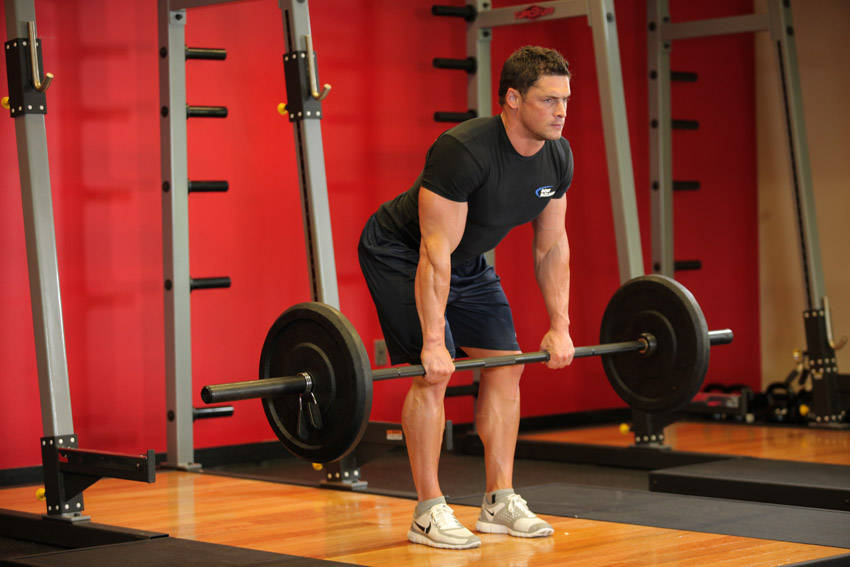
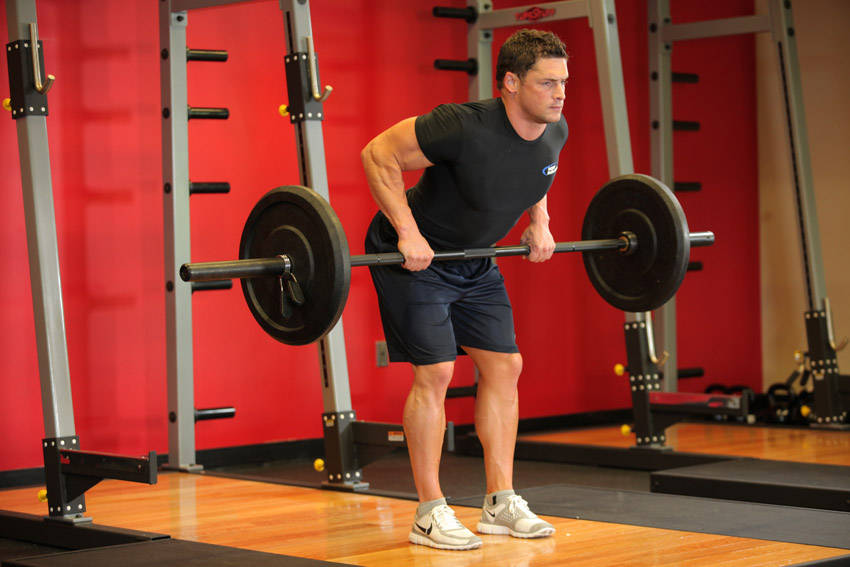
How to Do the Barbell Bent-Over Row
- 1Set your feet about hip-width under a loaded bar and grip it just outside your knees with a pronated (overhand) grip.
- 2Hinge at the hips and push your butt back to lower your torso, keeping a neutral spine — torso angle anywhere from roughly 15 degrees (Yates) to 45 degrees, or near-parallel for a strict Pendlay.
- 3Brace your core hard, set your lats, and pull your shoulders down and back so your spine stays rigid and neutral throughout.
- 4Let the bar hang at arm's length, then row it toward your lower ribs/upper abdomen by driving your elbows back, not by jerking your torso up.
- 5Squeeze your shoulder blades together at the top with the bar lightly touching, keeping the movement smooth and free of momentum.
- 6Lower the bar under control to a full stretch (or back to the floor for a Pendlay) and reset your brace before the next rep.
Coaching Cues
Common Mistakes
Variations & Related Lifts
What Lifters Say
Based on 11,200 online discussions
The barbell bent-over row is widely regarded as one of the best back-thickness builders available, and lifters love that it lets you move heavy loads in a horizontal pull. Because you're supporting your own braced torso, it doubles as posterior-chain and core work, with strong carryover to the deadlift. The trade-off everyone acknowledges is that it's far less forgiving than a chest-supported or machine row.
Most of the discussion centers on torso angle and which variation to run. The strict Pendlay row uses a near-parallel torso with the bar resetting on the floor each rep for explosive, momentum-free pulls; the Yates row uses a more upright (~15-30 degree) torso with a bit more cheat to overload the upper back; and the classic ~45-degree row sits in between. The community consensus is that there's no single 'correct' angle — a more horizontal torso shifts emphasis toward the upper back and rear delts, while a more upright angle and a lower pull point shift it toward the lats.
The universal warning is about the lower back and momentum. The most common mistake people call out is standing the torso up to heave the bar, which turns a back exercise into a hip swing and stresses the spine. The standard advice is to brace like you're about to be punched, keep the spine neutral, drive the elbows rather than the hips, and pick a weight you can row strictly. People with finicky lower backs often raise the torso angle, switch to a Pendlay reset to keep each rep honest, or fall back to chest-supported rows on high-volume days.
Why Lifters Love It
- Builds serious back thickness across the mid-traps, rhomboids, and lats
- Loads heavier than most rows, driving big strength and mass gains
- Trains the whole posterior chain, including the spinal erectors as bracing stabilizers
- Strong carryover to deadlift lockout and overall pulling strength
Common Pitfalls
- Form-dependent and easy to turn into a momentum-driven cheat lift
- Taxes the lower back, which can become the limiting factor or get sore
- Holding a strict bent-over position is fatiguing and hard to keep honest as you tire
- Risky for people with existing lower-back issues if bracing breaks down
Keep Reading
- Barbell Row Help — form troubleshooting Q&A — Barbell Medicine Forum
- RP Strength: Maximizing Back Muscle Growth (Dr. Mike Israetel) — RP Strength
- Bent BB Rows? — row variation selection discussion — Barbell Medicine Forum
Frequently Asked Questions
What torso angle should I use for barbell rows?
What's the difference between a Pendlay row and a Yates row?
How do I protect my lower back during barbell rows?
Where should I pull the bar to on a bent-over row?
Should I use an overhand or underhand grip for barbell rows?
Are barbell rows or dumbbell rows better?
Related Exercises
Kettlebell
Alternating Kettlebell Row
Upper Back · Kettlebell
Kettlebell
Alternating Renegade Row
Upper Back · Kettlebell
Barbell
Bent Over Barbell Row
Upper Back · Barbell
Barbell
Bent Over One-Arm Long Bar Row
Upper Back · Barbell
Barbell
Bent Over Two-Arm Long Bar Row
Upper Back · Barbell
Dumbbell
Bent Over Two-Dumbbell Row
Upper Back · Dumbbell
Library last reviewed June 22, 2026 · How these guides are written