Overhead Press
The truest test of pressing power
Body Part
Shoulders
Equipment
Barbell
Level
Intermediate
Type
Compound
Force
Push
The standing barbell overhead press is the original measure of upper-body strength, building boulder shoulders, strong triceps, and a braced core all at once. Because nothing supports you, it demands total-body tension and honest technique, which is exactly why old-school lifters consider it the most carryover-rich press you can do.
Muscles Worked
In Position
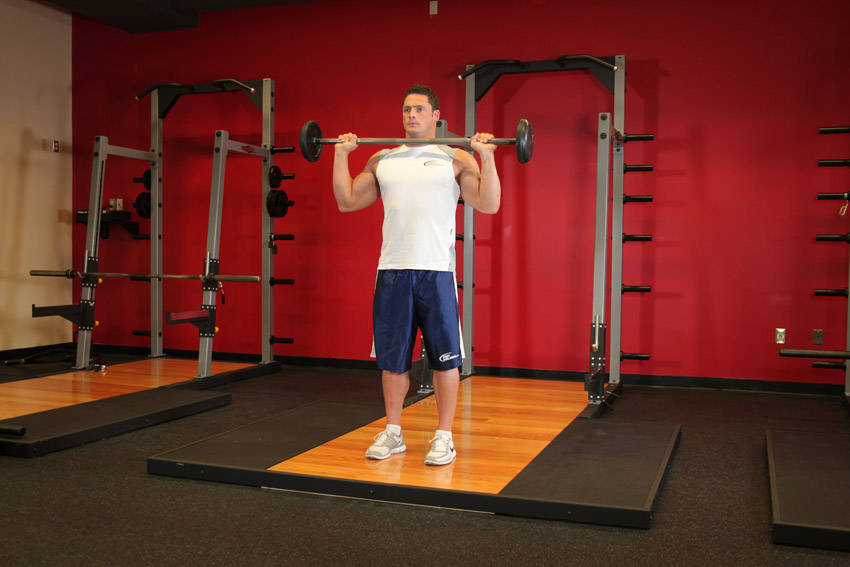
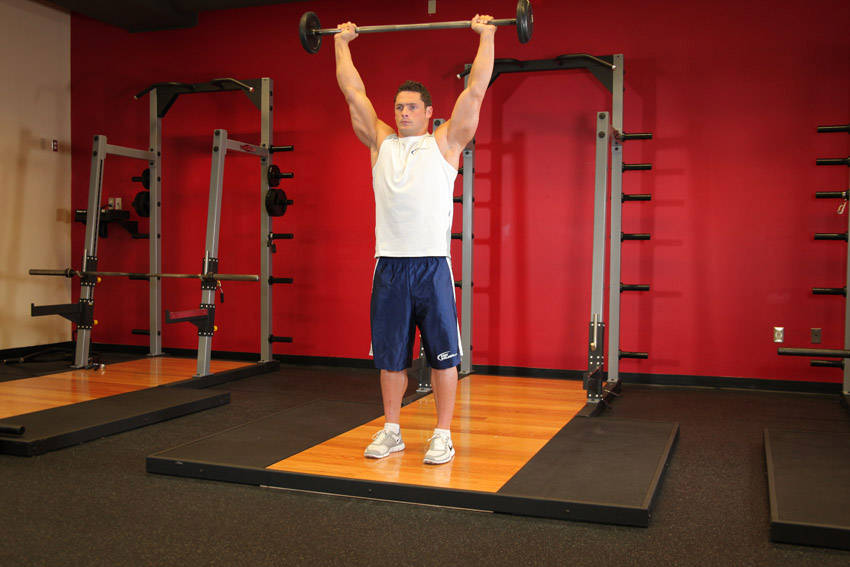
How to Do the Overhead Press
- 1Set the bar in the rack at upper-chest height, grip it just outside shoulder-width with vertical forearms, and rest it on the meat of your front delts.
- 2Unrack and step back, stacking the bar over your mid-foot with elbows slightly in front of the bar and wrists straight.
- 3Brace hard: squeeze your glutes, pull your ribs down so you're not leaning back, and take a big breath into your belly.
- 4Press the bar straight up, moving your head slightly back to clear a path around your chin rather than pressing around it.
- 5As the bar passes your forehead, push your head 'through the window' so the bar finishes stacked directly over your shoulders and mid-foot.
- 6Lock out with biceps near your ears and shoulders shrugged up slightly, then lower under control back to your front delts and reset your brace.
Coaching Cues
Common Mistakes
Variations & Related Lifts
What Lifters Say
Based on 33,000 online discussions
The overhead press has a near-mythical reputation in strength circles as the truest test of pressing power. Unlike the bench, nothing holds you up, so every rep exposes weak links in your core, your bracing, and your shoulder stability. Lifters love it precisely because it can't be faked, and because it builds the kind of round, capped delts and lockout strength that carry over everywhere.
The technique conversation centers on two things: the bar path and the brace. The bar has to travel straight up, which means pulling your head back to let it clear your chin, then pushing your head 'through the window' so it finishes stacked over your shoulders and mid-foot. Just as important is staying upright. The community is adamant about squeezing the glutes and pulling the ribs down so you don't turn the lift into a leaning-back standing incline press, which both reduces shoulder work and stresses the lower back.
The big debate is strict versus push press. The strict press is the gold standard for raw shoulder strength and the most humbling lift in the gym, progressing only a few pounds a month for most people. The push press uses leg drive to move more weight and is the go-to overload tool when the strict press stalls. The pragmatic consensus is to keep the strict press as your main measuring stick and use the push press as an accessory to break through plateaus, while accepting that overhead progress is just slow by nature.
Why Lifters Love It
- Builds genuinely strong, capped shoulders along with hard-working triceps and upper back
- Demands full-body tension, so it trains core bracing and glutes alongside the press
- Considered the most honest upper-body lift since there's no bench or seat to cheat with
- Strong carryover to bench lockout, handstands, and overhead athletic movements
Common Pitfalls
- Progresses painfully slowly compared to the bench, often just a few pounds a month
- Easy to cheat into a standing incline press by leaning back excessively
- Demands good shoulder mobility to lock out overhead with a vertical torso
- Cranky shoulders or elbows can flare up if technique or volume is off
Keep Reading
- Barbell Medicine: Press Like A Pro — The Classic Press — Barbell Medicine
- BarBend: How to Overhead Press — Technique, Variations, and Benefits — BarBend
- Marty Gallagher: Master the Overhead Barbell Press — IronCompany
Frequently Asked Questions
What's the correct bar path on the overhead press?
How much should I lean back when overhead pressing?
Why does the glute squeeze and 'ribs down' cue matter?
Strict press or push press, which should I do?
Why is my overhead press so weak and slow to progress?
Why do my wrists hurt during overhead press?
Related Exercises
Cable
Alternating Cable Shoulder Press
Shoulders · Cable
Dumbbell
Alternating Deltoid Raise
Shoulders · Dumbbell
Kettlebell
Alternating Kettlebell Press
Shoulders · Kettlebell
Barbell
Anti-Gravity Press
Shoulders · Barbell
Bodyweight
Arm Circles
Shoulders · Bodyweight
Dumbbell
Arnold Dumbbell Press
Shoulders · Dumbbell
Library last reviewed June 22, 2026 · How these guides are written