Plank
Anti-extension core bracing, no crunches needed
Body Part
Core
Equipment
Bodyweight
Level
Beginner
Type
Isolation
Force
Static
The plank is an isometric core hold where you keep your body in a rigid straight line, training the abs and deep core to resist your spine sagging — what coaches call anti-extension. It builds the bracing strength that protects your back under heavy squats and deadlifts, all with zero equipment. Done with real tension it's far more useful than the multi-minute endurance contests it's famous for.
Muscles Worked
In Position
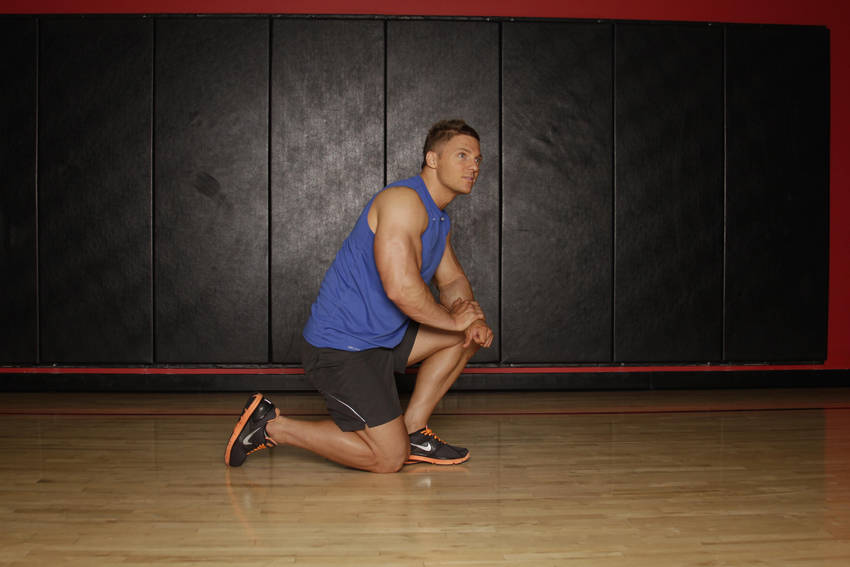
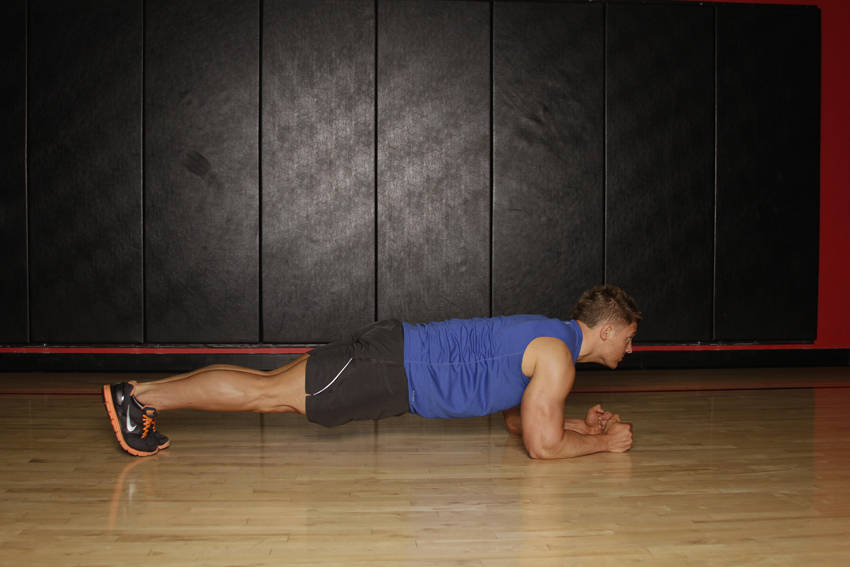
How to Do the Plank
- 1Set your forearms on the floor parallel to each other, elbows directly under your shoulders, with your feet together or hip-width behind you.
- 2Rise onto your toes so your body forms a straight line from your head through your hips to your heels.
- 3Tuck your chin slightly to keep your neck neutral and gaze at the floor just ahead of your hands.
- 4Brace your abs hard as if about to be punched, and tuck your tailbone under (posterior pelvic tilt) so your lower back doesn't arch.
- 5Squeeze your glutes and quads, and actively push the floor away to spread your shoulder blades and create full-body tension.
- 6Hold this maximal-tension position for short, hard bouts (about 10-30 seconds), then rest and repeat rather than holding loosely for minutes.
Coaching Cues
Common Mistakes
Variations & Related Lifts
What Lifters Say
Based on 7,200 online discussions
The plank is the community's default anti-extension core exercise, praised for being back-friendly, equipment-free, and a genuine teacher of how to brace. The recurring insight is that it's not really a 'how long can you hold it' challenge — it's a how-hard-can-you-brace exercise. Lifters who treat it that way get real carryover to keeping a neutral, stable spine under heavy squats and deadlifts.
The single most-repeated point is that holding a plank for five minutes is a waste of time. Once you can hold a solid plank for around 30-60 seconds with real tension, adding more time just trains low-level endurance and tells you little about strength. The community consensus, popularized by coaches like Stuart McGill, is to use short, maximally hard holds (often 10-second efforts with everything squeezed) or to make the exercise harder rather than longer — long-lever planks, weight on the back, body saws, or shoulder taps.
The other big theme is doing it correctly versus just hanging there. The two classic failures are sagging hips (lower back arches and takes over) and piked hips (turning it into a rest position). The fix that comes up constantly is to tuck the tailbone into a posterior pelvic tilt, brace the abs as if bracing for a punch, and squeeze the glutes and quads — the RKC plank, which dials all of that up to maximum, is frequently recommended as the version that makes even 10 seconds genuinely brutal. Planks aren't a complete core program by themselves, but as the anti-extension piece they're hard to beat.
Why Lifters Love It
- Builds the anti-extension bracing strength that protects the spine under heavy lifts
- Requires no equipment and can be done literally anywhere
- Beginner-friendly and low-risk on the lower back compared to crunches and sit-ups
- Teaches full-body tension and how to properly brace the core
Common Pitfalls
- Boring, and easy to coast through with no real intensity
- People waste time chasing multi-minute holds that mostly build endurance, not strength
- Easy to do with sagging hips or piked hips and get little out of it
- Static hold doesn't directly build the visible 'six-pack' the way some expect
Keep Reading
- Bret Contreras: The RKC Plank — Bret Contreras
- StrongFirst forum: Hardstyle plank progressions — StrongFirst Forum
- Rdella Training: How To Do The RKC/Hardstyle Plank — Rdella Training
Frequently Asked Questions
How long should I hold a plank?
Why is holding a plank for 5 minutes pointless?
What is an RKC plank and why is it harder?
Should my hips be high or low in a plank?
Do planks give you abs?
What are good progressions when planks get easy?
Related Exercises
Library last reviewed June 22, 2026 · How these guides are written