Dumbbell Lateral Raise
The #1 builder of wide, capped delts
Body Part
Shoulders
Equipment
Dumbbell
Level
Beginner
Type
Isolation
Force
Push
The dumbbell lateral raise is the single best exercise for building the side delts that give your shoulders that wide, capped, 3D look. It's a simple isolation move, but it's also one of the most ego-lifted exercises in the gym, so the difference between a good lateral raise and a useless one comes down entirely to leaving your pride at the rack and using strict form.
Muscles Worked
In Position
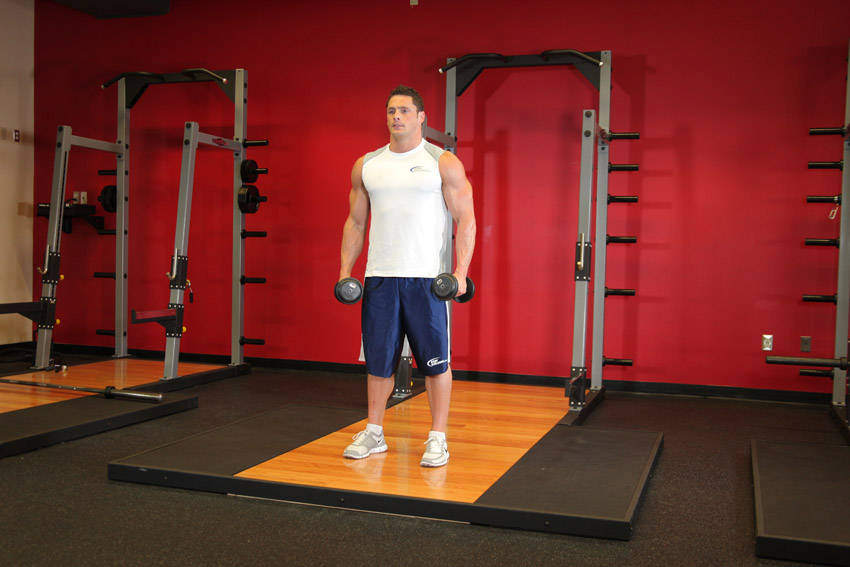
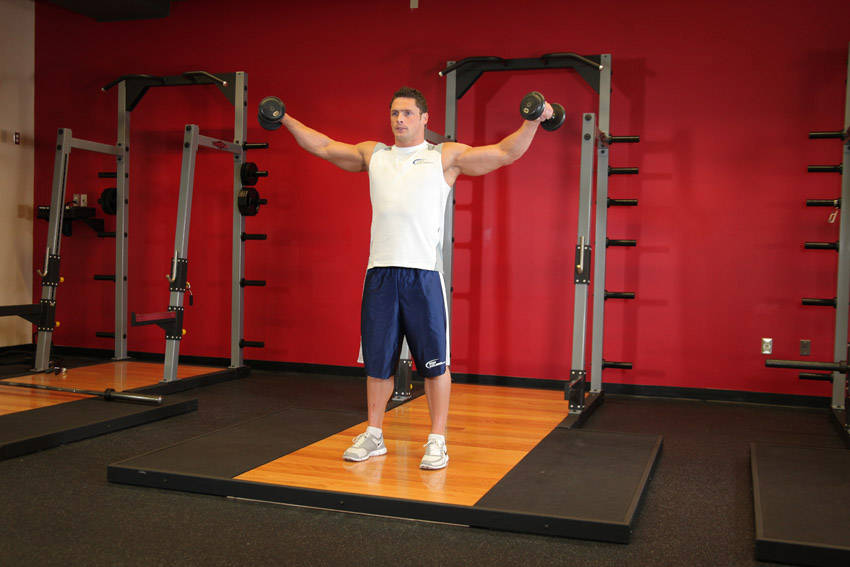
How to Do the Dumbbell Lateral Raise
- 1Stand or sit tall with a light dumbbell in each hand at your sides, palms facing in and a slight bend in the elbows.
- 2Set your shoulders down and back, and lean your torso forward just a few degrees to put the side delt in line with gravity.
- 3Lead with your elbows, raising the dumbbells out to the sides as if you're pouring two pitchers, keeping the elbows higher than or level with the hands.
- 4Raise to about shoulder height where the upper arms are roughly parallel to the floor; going much higher shifts work to the traps.
- 5Pause briefly at the top with no shrugging, feeling the side delt do the work.
- 6Lower slowly and under control all the way down, resisting the weight through a full stretch rather than dropping it.
Coaching Cues
Common Mistakes
Variations & Related Lifts
What Lifters Say
Based on 27,000 online discussions
The dumbbell lateral raise is the undisputed king of side-delt training, and that matters because the side delts are what give your shoulders width and that capped, 3D silhouette. Pressing movements barely touch them, so if you want broad shoulders, direct lateral work isn't optional. The catch is that this simple-looking exercise is probably the most consistently butchered movement in the entire gym.
The community's number-one message is to swallow your ego. Lateral raises are a small-muscle isolation move, and the side delts are weak, so the weight should be genuinely light. The moment you start swinging, shrugging, and heaving heavy dumbbells, the traps and momentum take over and the side delt gets almost nothing. The cues that get repeated endlessly are to lead with the elbows, keep a slight forward lean, 'pour the pitcher' so the pinkies tip slightly up, and keep the traps quiet by not shrugging.
The modern wrinkle is technique-driven intensity rather than load. Lifters increasingly favor cable and machine versions for constant tension, and a hugely popular tactic is lengthened partials: after your strict full reps fail, keep pumping out shorter reps from the bottom stretched position where the delt is most loaded. Combined with high reps and a slow eccentric, that's how people finally make their side delts grow without resorting to the cheat reps that ruin the exercise.
Why Lifters Love It
- The most direct and effective way to build the side delts for that wide, capped look
- Side delts are barely hit by pressing, so laterals fill a real gap in shoulder development
- Cheap and simple, you just need a pair of light dumbbells
- Responds extremely well to high reps, drop sets, and lengthened partials at the end of a set
Common Pitfalls
- The single most ego-lifted exercise, and heavy cheat reps make it nearly useless
- Very easy to let the traps take over with even a slight shrug
- Gym dumbbells often jump 5 lb at a time, which is huge for such a small muscle
- Standard dumbbell version has poor tension at the bottom where the delt is stretched
Keep Reading
Frequently Asked Questions
Why does everyone say to go lighter on lateral raises?
What does 'lead with the elbows' mean?
What is the 'pour the pitcher' cue?
Why do I feel lateral raises in my traps instead of my delts?
How high should I raise the dumbbells?
What are lengthened partials and should I use them?
Library last reviewed June 22, 2026 · How these guides are written